How to Set Up “High-Intent, High-Conversion” Audiences in ChatGPT
How to Set Up “High-Intent, High-Conversion” Audiences in ChatGPT
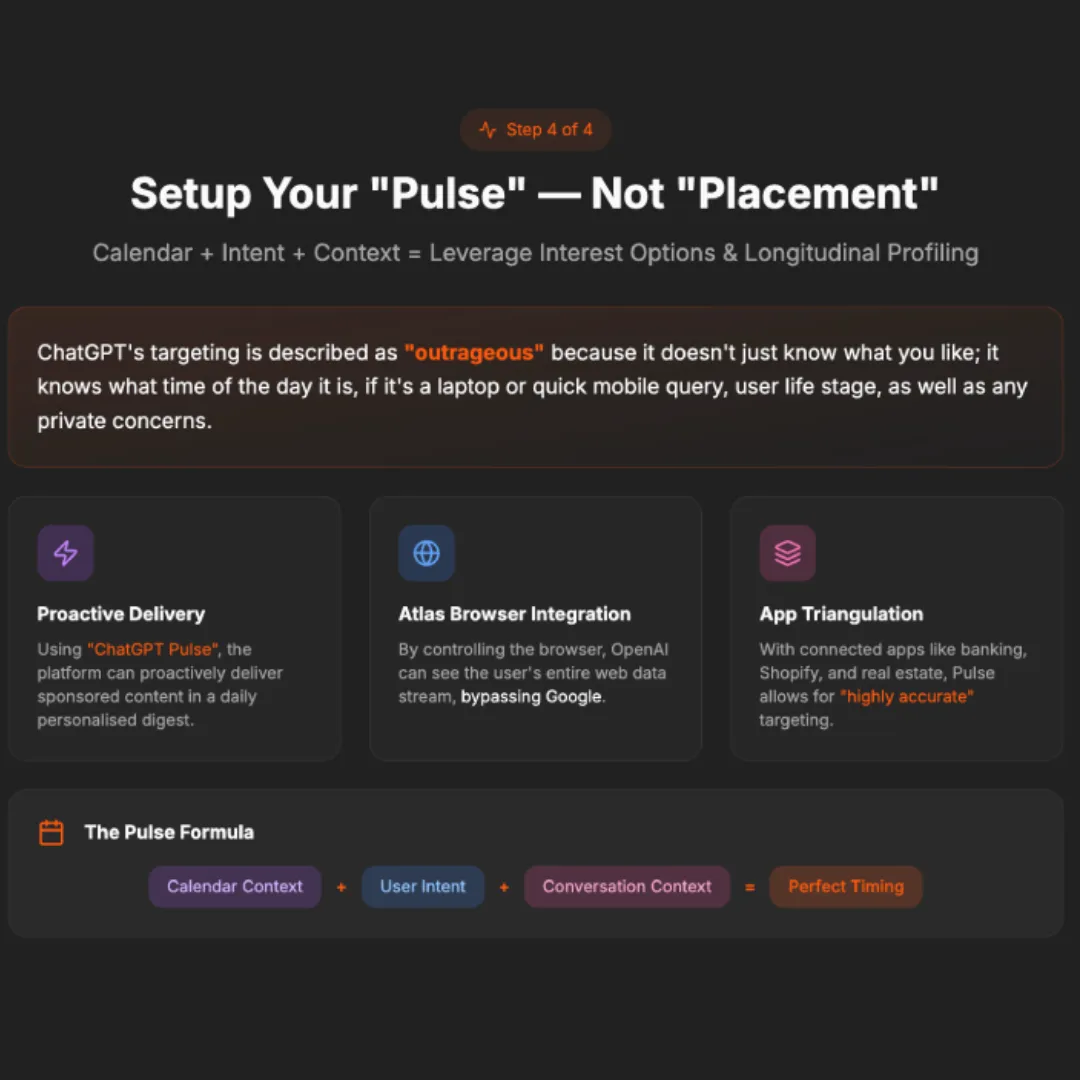
Audience targeting in ChatGPT does not operate like traditional interest or behaviour targeting. There are no scrolling feeds, no lookalike lists, and no demographic toggles in the conventional sense.
Instead, ChatGPT audiences are defined by intent expressed through questions.
Intent Is the Audience
In ChatGPT, the audience is not:
Age
Gender
Interests
The audience is:
The question being asked
The context surrounding it
The decision the user is trying to make
This fundamentally changes how “high-intent” audiences are identified.
High-Intent Signals in AI Conversations
High-intent questions often include:
Comparisons
Timing indicators
Risk assessment
Cost or outcome considerations
Examples:
“Is now the right time to scale an eCommerce brand?”
“What’s the best marketing strategy for property developers in 2026?”
These questions signal readiness without requiring explicit purchase language.
Why This Converts Better Than Traditional Targeting
Traditional ads guess intent based on behaviour. ChatGPT receives intent directly from the user.
This reduces:
Wasted impressions
Low-quality clicks
Misaligned messaging
It increases:
Relevance
Trust
Conversion efficiency
Implications for Marketers
Instead of building audiences, brands must:
Map key customer questions
Understand decision stages
Align content with those stages
This approach works across industries, but is particularly powerful for high-consideration purchases like Property and strategic eCommerce growth.
FAQs — Blog 11
1. Is this better than interest targeting?
Yes. Intent-based targeting is more precise than inferred interests.
2. Can brands influence which questions they appear against?
Indirectly, by publishing aligned content and building authority.
3. Does this scale?
Yes. Question clusters create scalable intent coverage.


